A TPI screen finds the physical limits behind your swing faults. Here is what we assess, what we do with the findings, and how we partner with your coach.
If you have ever taken a lesson, drilled a fix for weeks, and still watched the same swing fault creep back in, the problem may not be in your technique at all. It may be in your body. That is the idea behind a TPI screen, and it is one of my favorite ways to help golfers across Canton, Cartersville, and Rome get out of pain and play the game they love for longer.
I am Dr. Daniel Turner. I am TPI Certified (Medical Level 3, Golf Level 2) and SFMA Level 2 certified, and I see golfers in all three of our offices. I want to be clear up front about what this is and what it is not. A TPI screen is a physical assessment of how your body moves. It is not a swing lesson. I work on the body; your coach works on the swing. When those two roles line up, good things happen. Let me walk you through exactly what a screen involves and why it matters.
A TPI screen is a structured movement assessment developed by the Titleist Performance Institute (TPI) to evaluate the physical foundation a golf swing is built on. Rather than watching you hit balls, I take you through a series of simple, standardized movements — things like a deep squat, a pelvic rotation, a torso rotation, a shoulder reach, and single-leg balance. Each test tells me something specific about how well a region of your body moves and controls itself.
The whole premise is what TPI calls the Body-Swing Connection: there is no one perfect way to swing a club, but there is a most efficient way for you to swing it given how your body actually moves. When a part of your body cannot do what an efficient swing asks of it, your body finds a workaround. That workaround is a compensation, and compensations are where a lot of swing faults and injuries are born.
A screen typically takes around half an hour, though that can vary from golfer to golfer. It is hands-on and low-key — no max-effort lifting, no club required, just movement. I am not grading you, and there is no way to fail. I am simply mapping how your body moves today so we have a clear, honest starting point. You can learn more about how this fits into our broader golf performance work, and we offer it at each location, whether you train near LakePoint in Bartow, play the courses around Cherokee County, or are a Berry or Shorter athlete down in Rome.
Most golfers who walk into my office already have a theory about what is wrong. They have read an article, watched a video, or had a buddy tell them their hips are tight. Sometimes they are right. Often they are not, or the tightness they feel is actually a stability problem in disguise. A standardized screen takes the guesswork out of it. Because the tests are the same every time and the same for everyone, I can compare your left side to your right, compare you against what an efficient swing requires, and compare today's screen to one we do three months from now. That repeatability is what turns a vague sense of "something feels off" into a specific, addressable list. It also protects you from chasing the wrong fix — there is no point stretching a joint that is already plenty mobile but poorly controlled.
This is the question I get most, and the answer is the heart of the whole approach. Your swing is a chain of coordinated movements, and the chain is only as good as its links. When one link is restricted, the others have to make up for it — usually in a way that is less efficient and harder on your tissues.
A few common examples I see in the clinic. If your hips cannot rotate well, your lower back often picks up the slack and twists more than it should. If your thoracic spine — the mid-back — is stiff, you may struggle to make a full backswing turn without lifting up or sliding, which TPI links to faults like the dreaded "early extension." If a shoulder cannot reach overhead cleanly, your sequencing at the top of the swing changes. None of these are technique problems your coach can simply cue away, because the body physically cannot get into the position being asked of it.
Here is the part that frustrates so many dedicated golfers: a compensation can be remarkably stubborn. Once your nervous system finds a workaround that lets you make contact with the ball, it will run that pattern automatically, swing after swing, even when you are consciously trying to do something different. That is why a fault you "fixed" on the range shows up again under pressure on the course. The conscious correction your coach gave you is fighting an unconscious movement habit your body adopted because it had no better option. Give the body a better option — restore the missing motion — and the correction finally has room to stick.
Throughout the screen I am sorting every finding into one of two buckets. Mobility is whether a joint has enough range of motion — can your hips rotate, can your mid-back turn, can your shoulders reach. Stability is whether you can control that range under load — can you hold a position, decelerate, and stay balanced. A golfer can have plenty of mobility but no control over it, or great control over a range that is too limited. Both cause problems, and they call for very different solutions.
This distinction matters enormously for what happens next, because mobility and stability are treated in opposite ways. A true mobility restriction needs the motion opened up — through hands-on care and mobility drills. A stability problem needs the opposite: the range is already there, so piling on more stretching can actually make things worse. What that golfer needs is control and strength work to own the range they have. Mislabel one as the other and you can spin your wheels for months, which is exactly why I screen rather than assume.
The screen looks at the whole body, but for golfers a few areas earn extra attention. The hips are the engine of the swing, so I check rotation, internal and external, on both sides. The thoracic spine is where most of your rotation should come from, sparing the lower back. The shoulders need both reach and control to keep the swing sequenced. And I always look at single-leg balance and ankle/foot mobility, because a swing is, fundamentally, a weight shift you have to control. When one of these is off, I can usually predict the compensation before I ever see you move a club.
It is worth understanding why these regions are so interconnected, because it explains why I never treat a single painful spot in isolation. The body works in an alternating pattern of joints that prefer mobility and joints that prefer stability — the ankles want mobility, the knees want stability, the hips want mobility, the lumbar spine wants stability, the thoracic spine wants mobility, and so on up the chain. When a "mobility" joint like the hip or mid-back loses its range, the "stability" joint right next to it, like the lower back, is forced to move more than it was designed to. That is the mechanical story behind a huge share of the golf back pain I see, and it is why fixing a stiff mid-back can quiet down a cranky lower back without my ever putting a hand on the lower back itself.
A screen is only useful if it changes the plan. Once I know which links in your chain are weak or stiff, I do two things. First, I use hands-on care to address restrictions that are limiting motion — chiropractic adjustment, soft-tissue work, and mobilization aimed at the specific regions the screen flagged. Second, and just as important, I prescribe targeted corrective exercise so the new motion sticks and so the stability side of the equation catches up.
The hands-on side matters because restoring motion can change what your body is willing to do almost immediately. Spinal manipulation is a well-studied, conservative tool. The NCCIH (NIH) notes it is generally considered safe when performed by a trained professional, and for the back pain that sidelines so many golfers, both the American College of Physicians clinical practice guideline and a 2017 JAMA review include spinal manipulation among recommended noninvasive options for low back pain. That fits our philosophy exactly: conservative, evidence-based, non-surgical care first.
I want to be careful and measured about what that evidence does and does not say. These are recommendations for managing low back pain, where manipulation is one reasonable conservative option among several, including exercise and other noninvasive approaches. They are not a claim that an adjustment improves golf performance, and I would never present them that way. I lean on this body of work for one honest reason: a meaningful share of the golfers I screen are dealing with low back pain, and it is reassuring to know that the conservative, hands-on care I provide sits within mainstream, evidence-based guidance for that problem.
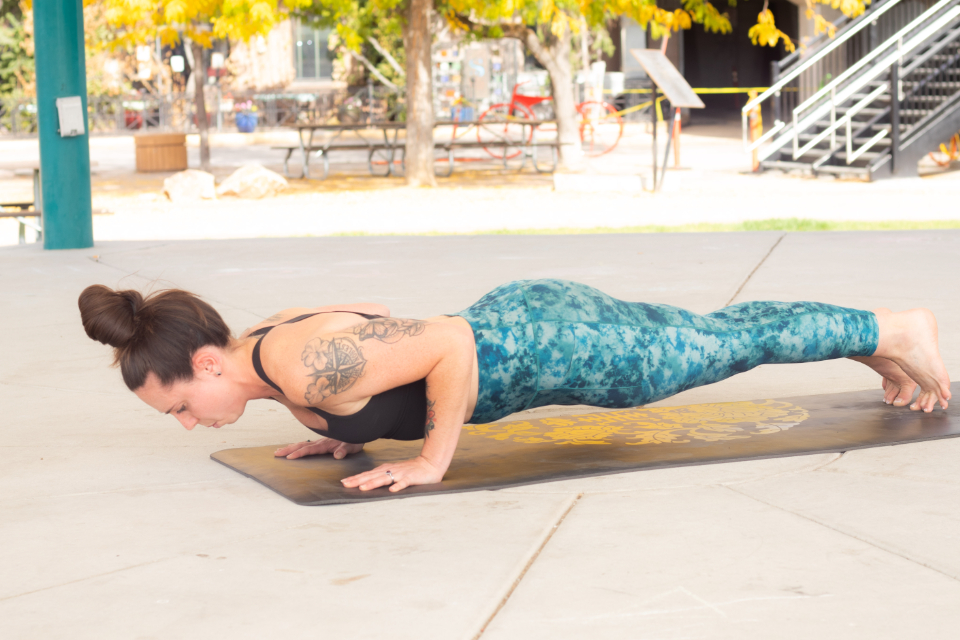
Adjustments and soft-tissue work open a window; corrective exercise is how you keep it open. After the screen I give you a short, specific set of drills aimed at the exact things you were missing — maybe hip rotation drills, a mid-back mobility series, or balance and control work. These are not generic stretches. They are chosen because the screen told us your body needs them, and we re-screen over time to confirm the changes are real and not just temporary. As the limitations resolve, the compensations your swing was built around tend to fade on their own.
I try hard to keep the homework realistic. A program you will not do is worthless, so I would rather give you three or four drills you can knock out in ten minutes at home than a sprawling routine that lives in a drawer. We progress them as you improve — what restores mobility in week one is not what builds control in week six — and we adjust based on what the next screen shows. The goal is not to make you a permanent patient. It is to hand the movement back to you so the corrections become how you move by default, on and off the course.
The injury piece is the part I care about most. When the body compensates round after round, the tissue absorbing that extra stress eventually complains — the lower back, the lead shoulder, the elbows, the lead hip. By restoring the motion that should be doing the work and building the stability to control it, we take load off the structures that were never meant to carry it. This is the same thinking behind everything we do with sports injuries: find the real driver, not just the painful spot.
Golf injuries are rarely the result of one bad swing. They are usually the slow accumulation of thousands of swings made through a compensation, plus the practice reps, plus the round itself. That is genuinely good news, because a problem that builds up gradually can usually be unwound gradually with the right plan, well before it becomes the kind of pain that keeps you off the course for a season. Addressing the movement limitation early is far easier than rehabbing the injury it eventually causes.
I am going to give you the honest answer: I cannot promise that, and I will not. Anyone guaranteeing you extra yardage off a body screen is overselling it. What I can tell you is what is actually within our control. If your hips and mid-back can finally rotate the way an efficient swing wants them to, and you can control that motion, your swing has a healthier, more efficient platform to work from. Many golfers do feel they move more freely and play with less pain. Whether that translates to distance depends on your swing, your coach's work, and a dozen other factors — and that is exactly why I stay in my lane.
My job is the body. I want you turning better, balancing better, and finishing your rounds without that nagging ache. Speed and distance are downstream of a lot of things; a body that moves well simply removes one of the biggest obstacles. I would rather under-promise and over-deliver than sell you a number I have no business guaranteeing. If you leave feeling looser, more balanced, and less sore — and your coach now has a body that can do what their cues ask — I have done my part well.
This is the part I want every golfer to understand clearly: I am not a swing coach, and I have no interest in becoming one. A TPI screen complements your lessons — it does not replace them. The most powerful results I see come from the two roles working together.
Here is how it typically plays out. Your coach identifies a swing fault and may suspect it has a physical root. I screen you, find the limitation driving it, and we build a plan to fix the body. With the restriction resolved, your coach's cues finally have something to work with, because your body can now get into the position they are asking for. When a coach and I are aligned, the golfer stops fighting their own body, and progress that used to stall starts moving again. If you have a coach you trust, bring them into the conversation — I am always happy to coordinate.
This division of labor is not just a courtesy; it is what makes the whole thing work. A swing coach is an expert in technique, sequencing, and the thousand subtle decisions that go into a repeatable swing. That is not my training and I will not pretend otherwise. My expertise is the musculoskeletal system — how your joints, muscles, and movement patterns either support that swing or sabotage it. When we each stay in our lane and talk to each other, you get the benefit of two specialists instead of one generalist guessing at the other's job. If you do not yet have a coach, that is fine too; the body work stands on its own, and you can layer lessons on top whenever you are ready.
I see golfers at all three of our North Georgia offices, and the screen is the same thorough process at each. If you are in Cherokee County, start with our Canton golf performance chiropractor page. Bartow County players and folks training around LakePoint can head to our Cartersville golf performance chiropractor page. And in Floyd County, including Berry and Shorter athletes, our Rome golf performance chiropractor page is the place to begin.
A screen is a wellness and performance assessment, not an emergency evaluation, so there are situations where you should be seen by a physician before you ever think about a movement screen. If you are dealing with sudden, severe back pain, pain that radiates down a leg with numbness or weakness, loss of bowel or bladder control, unexplained weight loss, fever, or pain following a significant trauma, those are red flags — please seek medical care or go to the emergency room before booking a movement screen.
The same caution applies to the nagging aches athletes are tempted to play through. Persistent, localized bone pain — for example, shin pain that worsens with activity and lingers at rest — can be an early sign of a stress fracture, and a stress fracture pushed through a TPI screen or a corrective-exercise program can become a serious break. Pain that is sharp, escalating, accompanied by significant swelling, or that simply is not behaving like ordinary muscle soreness deserves a proper medical evaluation and imaging first, not a movement screen. If you are not sure which camp your symptoms fall into, err on the side of getting evaluated — I would rather you arrive cleared and ready to work than have us discover mid-program that something needed a doctor's attention all along.
For the everyday stiffness, recurring faults, and lingering aches that most amateur golfers carry, a TPI screen is a smart, conservative first step. When you are ready, I would be glad to take a look and help you build a body that holds up to the game.
No. A TPI screen evaluates how your body moves through a series of simple physical tests — squats, rotations, reaches, and balance work. No club or ball is required. I am assessing your body's mobility and stability, not watching you hit shots, so there is nothing to bring but yourself.
No, and that distinction matters. A golf lesson works on your swing technique; a TPI screen works on your body. I am TPI Certified (Medical Level 3, Golf Level 2) and SFMA Level 2 certified, but I am not a swing coach. I find the physical limitations behind swing faults and treat them, then coordinate with your coach, who handles the technique side.
No. I will not promise added distance — anyone who does is overselling it. What a screen and the follow-up care can do is restore the mobility and control an efficient swing depends on, often helping you move more freely and play with less pain. Distance depends on many factors, including your coach's work and your own swing.
I take the findings and build a plan that pairs hands-on care — chiropractic adjustment, soft-tissue work, and mobilization for the restricted regions — with targeted corrective exercises chosen specifically for what your screen revealed. We then re-screen over time to confirm the changes are holding and the compensations are fading.
Yes, and I prefer it. The best results come when I address the body and your coach addresses the swing. Once a physical restriction is resolved, your coach's cues finally have something to work with. If you have an instructor you trust, bring them into the conversation so we can coordinate.
All three. I see golfers in Canton, Cartersville, and Rome, and the screening process is the same thorough assessment at each location. You can start on the golf performance page for the office nearest you — Cherokee County, Bartow County and LakePoint, or Floyd County including Berry and Shorter athletes.
This article is for general education and is not a substitute for an individual evaluation. External links are provided for reference and do not imply endorsement.